
Sasol bursary 2026 requirements, fields of study, eligibility, funding, application dates and how to apply. See what applicants need before applying.
For many South African students, getting a university place is only the beginning of the challenge. The bigger question often comes afterwards: How will I afford the degree? Registration fees, study costs and the everyday expenses that come with being a student can quickly become difficult for a family to manage.
The Sasol bursary programmes are designed to support students and develop skills in areas that are important to Sasol and the wider economy. However, applicants should understand that there is not simply one Sasol bursary with one set of rules. The available programmes have different eligibility requirements, fields of study and application periods.
For 2026, the information provided includes the Sasol Foundation Bursary Programme, Sasol Mining Bursary Opportunities, and the Sasol Mainstream Bursary Programme, among other development opportunities. This guide explains what applicants need to know before submitting an application.
Table of Contents
What is the Sasol Bursary Programme?
The Sasol Foundation offers bursaries to talented students who intend to study full-time towards undergraduate degrees. Its STEM bursaries focus on fields connected to Science, Technology, Engineering and Mathematics, with priority given to areas linked to future capabilities such as the green economy and digitalisation.
The source lists areas including Engineering, Information Technology, Data Sciences, Agricultural Science, Environmental Sciences, Medical Sciences, Construction and Manufacturing.
There is also a Non-STEM bursary, but it is not open to everyone. These opportunities are reserved for qualifying students from Sasol fence-line communities, children of Sasol Khanyisa shareholders and children of Sasol employees.
This distinction is important. A student should not assume that having good marks automatically makes them eligible.
Who can apply for the Sasol Foundation bursary?
The Foundation bursary information states that applicants must be South African citizens by birth and must be pursuing, or planning to pursue, full-time degree studies at an approved public South African University or University of Technology.
Applicants are screened using several factors, including:
- South African citizenship by birth
- Household income verification
- Academic performance
- Financial need
- Whether the applicant belongs to the qualifying Sasol employee, shareholder or fence-line community groups
- Whether the applicant is pursuing their first undergraduate degree
- Age requirements
- Matric completion requirements
The combined household income must not exceed R800,000 per year, and the final selection prioritises financially needy and academically competitive applicants. Applicants must also not be older than 25 when applying.
Students already at university are not automatically excluded. The source says second-, third- and fourth-year university students applying for the Foundation bursary must have an average of 60% across all modules.
Which Sasol Foundation bursary should you apply for?
This depends largely on your background and qualification.
STEM applicants may apply for degrees connected to areas such as engineering, IT, data science, agricultural science, environmental science, medical sciences, construction and manufacturing.
Non-STEM applicants can be considered where they fall into the specified qualifying groups.
The source also states that postgraduate bursaries will not be available for the forthcoming academic year for both the STEM and Non-STEM Foundation bursaries.
Sasol Mining Bursary: who is it for?
The Sasol Mining Fence-line Mainstream Bursary is a separate opportunity. The source describes it as a performance-based programme with a work-back/pay-back obligation.
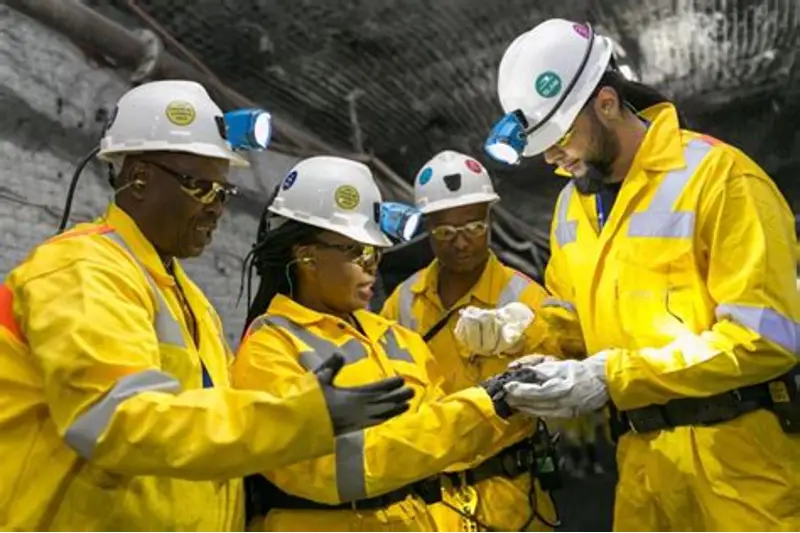
It supports full-time undergraduate studies in selected Engineering, Science and Technology qualifications, including Bachelor of Engineering and Engineering in Technology degrees at recognised South African universities.
The Mining opportunity is specifically aimed at South African citizens from Sasol Mining fence-line communities.
For the 2026 application cycle, the supplied information states that applications open on 24 August 2026 and close on 13 September 2026.
Which fields of study are covered?
The Mining information lists several eligible fields, including:
- Electrical Engineering
- Electronic Engineering
- Geology
- Industrial Engineering
- Mechanical Engineering
- Mining Engineering
- Mine Surveying at the University of Johannesburg
For Geology, the source specifically warns that an Honours qualification is mandatory.
For the broader Sasol Mainstream undergraduate programme, listed fields include Chemical Engineering, Chemistry, Civil Engineering, Data Science, Electrical Engineering, Electronic Engineering, Geology, Industrial Engineering, Mechanical Engineering, Metallurgy and Mining Engineering. Mine Surveying is listed under B.Eng. Tech. at a University of Technology.
What marks do Sasol Mining applicants need?
Applicants should pay close attention to the academic requirements because meeting the minimum does not necessarily mean that a bursary will be awarded.
For B.Eng. and B.Sc.Eng programmes, the supplied requirements include:
- Level 6 in Mathematics: 70–79%
- Level 6 in Physical Science: 70–79%
- Level 5 in English First Additional Language or Home Language: 60–69%, or Level 4 in English Second Additional Language: 50–59%
For B.Eng. Tech., the requirements include Level 5 in Mathematics, Physical Science and the applicable English requirement. Maths Literacy is not accepted.
Can students already at university apply?
Yes, certain Sasol bursary opportunities accept students who are already studying.
For the Mining programme, first-year applicants provide Grade 11 or Grade 12 results, while students in later years submit results from the previous academic year.
Students in their second, third or fourth year must be registered for full-time study in the applicable degree. Studies through UNISA are not accepted under the stated Mining criteria, and University of Technology studies are generally excluded except for Mine Surveying.
Does the Sasol bursary cover tuition, accommodation, transport and living expenses?
This is one area where applicants should be particularly careful.
The information supplied for this article does not provide a specific rand budget or a detailed breakdown showing how much is allocated to tuition, accommodation, transport, meals or a living allowance.
Therefore, applicants should not assume a particular amount or claim that every listed expense is covered simply because the bursary is described as comprehensive.
The source does describe the Sasol Mainstream Bursary Programme as a comprehensive package involving financial and developmental support throughout the study period.
However, because the supplied information does not give exact allowance amounts or a current item-by-item funding schedule, applicants should check the official Sasol bursary information and the terms of their specific bursary offer before making financial plans.
What documents and information are required?
Applicants should prepare carefully rather than rushing through the online form.
The Mining requirements state that applicants need a valid South African ID, a full academic record, proof of registration and proof of permanent home residence, including municipality and district.
Before submitting your application, it is also worth checking our bursary & scholarships guide to make sure your documents are properly prepared and that you avoid common application mistakes.
Shortlisted candidates must also be willing and able to complete online psychometric testing before the interview stage.
Importantly, Sasol warns that incorrect information can result in an application, bursary offer or existing bursary being withdrawn or terminated.
When does the Sasol bursary application open?
The supplied 2026 schedule gives the following dates:
Sasol Foundation: 1 August to 23 August 2026.
Sasol Mining: 24 August to 13 September 2026.
Applicants should always check the official application portal before submitting because application windows can change.
The source states that applications must be submitted before the closing date and that incomplete or late applications will not be considered. Applications sent by email instead of through the Sasol bursaries website will also not be considered.
How to apply for the Sasol bursary
Applicants should submit their applications through the official Sasol bursary application website. Before completing the form, check the current requirements and closing date carefully, as late or incomplete applications will not be considered.
Before applying, check that your citizenship, age, household income, community connection, qualification, university and academic results meet the requirements of the particular programme.
Do not apply simply because you see the word “Sasol bursary” and assume that every programme has the same rules. The Foundation, Mining and Mainstream opportunities have important differences.
What happens after applying?
Meeting the minimum requirements does not guarantee selection. Sasol explains that the number of bursaries is limited and that selection is competitive. Candidates may therefore be assessed against other applicants who also meet the minimum requirements.
Applicants should also make sure every piece of information in the application is accurate. Missing documents or incorrect academic information can cause an application to be treated as not meeting the criteria.
For the stated Mining process, applicants may undergo psychometric testing before interviews. The supplied information says notifications about application status are expected by the end of November.
Final advice before submitting your application
The strongest approach is not to treat the Sasol bursary as a quick application form. Read the requirements carefully, identify the specific Sasol programme you qualify for, check your academic results against its requirements and prepare your supporting documents before starting.
Most importantly, do not guess about funding. If you need to know whether your particular bursary offer covers tuition, accommodation, meals, transport, books or a living allowance, check the official Sasol information and the terms attached to the bursary offer because the supplied source does not provide those individual amounts.
The Sasol bursary can be a significant opportunity for eligible South African students, particularly those pursuing fields aligned with science, engineering, technology and future economic needs. But eligibility comes first. A carefully completed, truthful application gives you a much better starting point than simply applying without checking the rules.